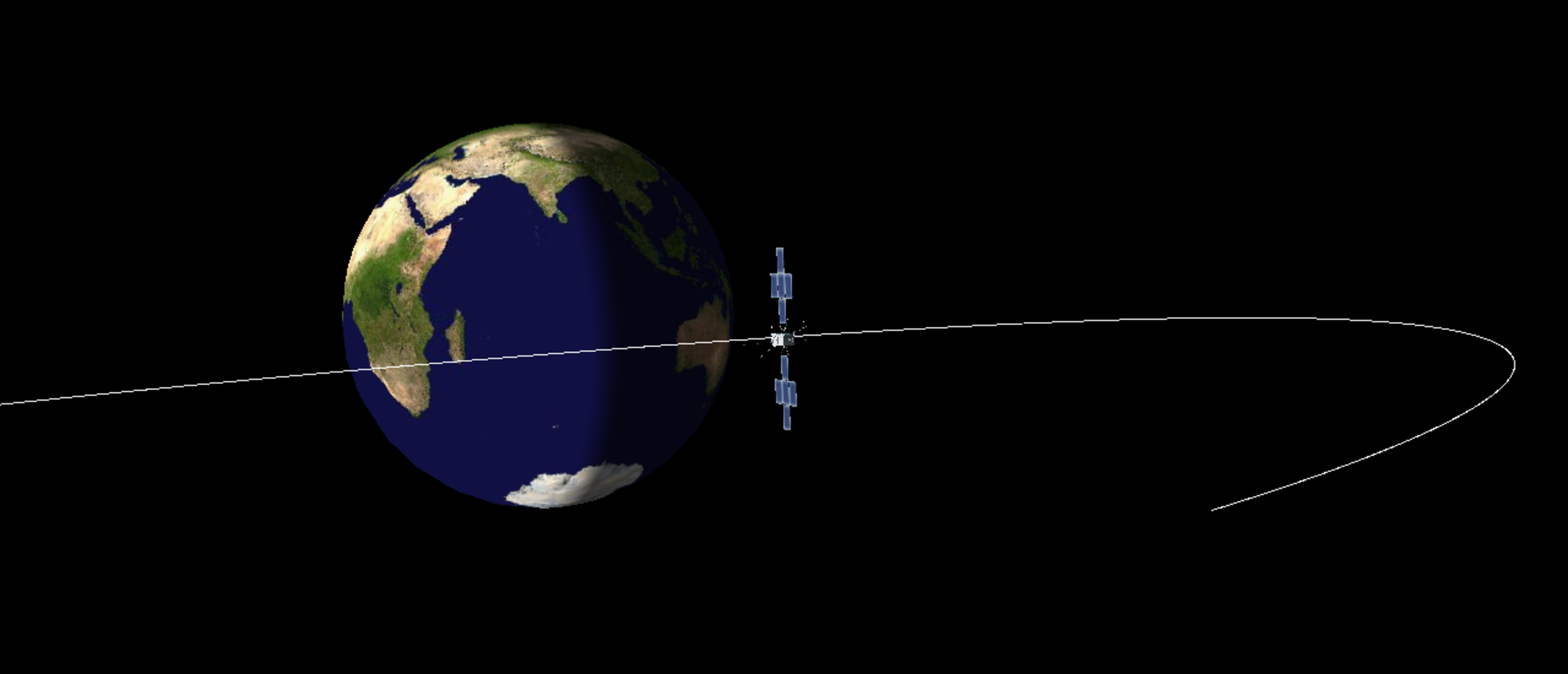
The European-Chinese Smile mission was cleared to begin science operations on 23 September. It will study how the flow of charged particles from the Sun interacts with Earth’s magnetic field and produces auroras.
The spacecraft launched on 19 May and reached its science orbit on 20 June. European and Chinese teams then checked communications, deployed mechanisms and prepared four instruments: X-ray and ultraviolet imagers, a magnetometer and a light ion analyser.
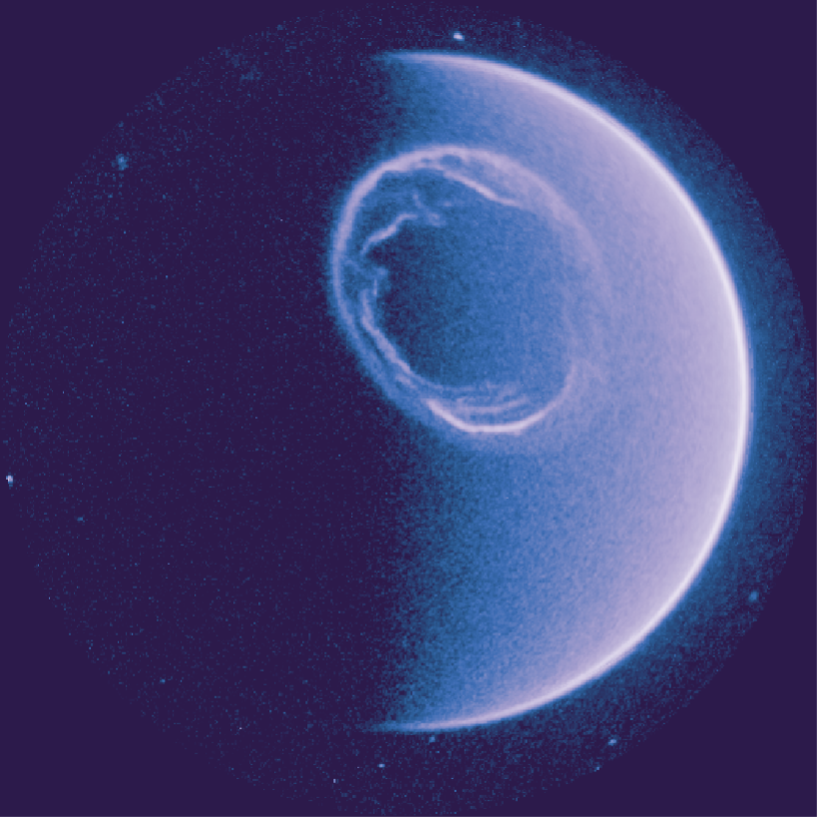
The ultraviolet imager, UVI, is already observing the northern auroral ring. An image shared by ESA, captured on 4 August, shows an auroral substorm, a brightening associated with a disturbance in Earth’s magnetic field. It is an ultraviolet observation, rather than a visible-light photograph.
The soft X-ray imager, SXI, has also been switched on and has taken test images of a distant supernova remnant. However, it detects excessive stray light when pointed towards Earth. The team is changing its settings and onboard software to reduce the interference.
ESA expects the stray light to reach a natural minimum in mid-October. Scientists then hope to obtain good images of the magnetopause, the boundary where the solar wind meets Earth’s magnetic field, or the northern polar cusp, which funnels particles towards the planet. Those results are still to come.