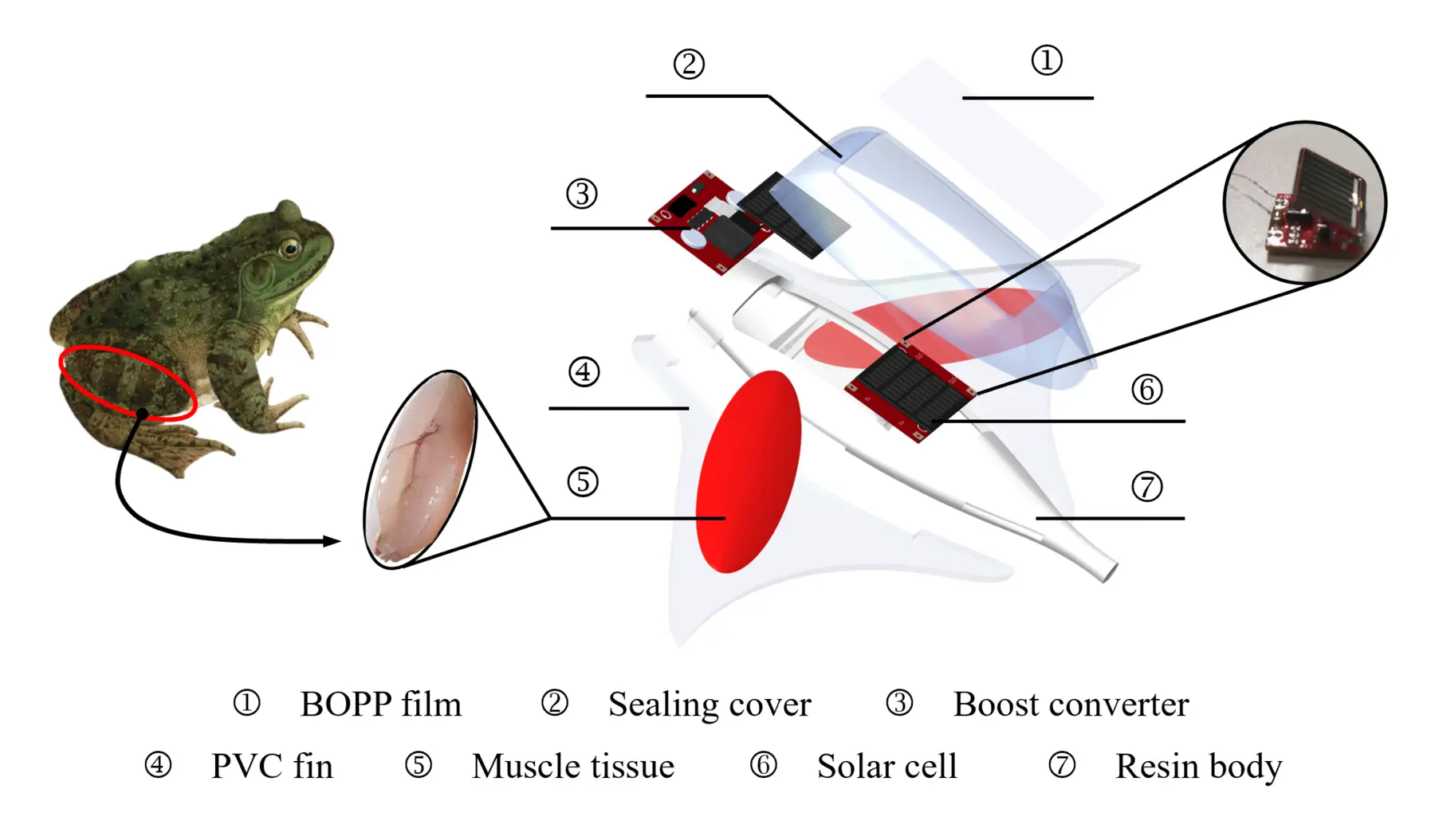
Researchers at the Shenyang Institute of Automation have developed a miniature biohybrid robot. Its fins are powered by an isolated bullfrog muscle, while near-infrared light is used for control.
Light Instead of Wires
Small solar cells on the robot's back convert infrared light into electrical signals that trigger the muscle to contract. By aiming a laser at the left or right panel, researchers can make the robot swim straight, turn, move in a circle, and reverse direction.
The robot's average speed is about 2.7 centimetres per second. It can carry up to five grams and move slowly on land.
For Now, a Laboratory Prototype
In culture, the muscle remained responsive to stimuli for up to 11 days and reliably powered the robot for seven days. The tissue's limited lifespan and its reliance on an external infrared source currently prevent the system from operating autonomously.
In the future, such devices could be used to monitor shallow-water ecosystems and study aquatic organisms.