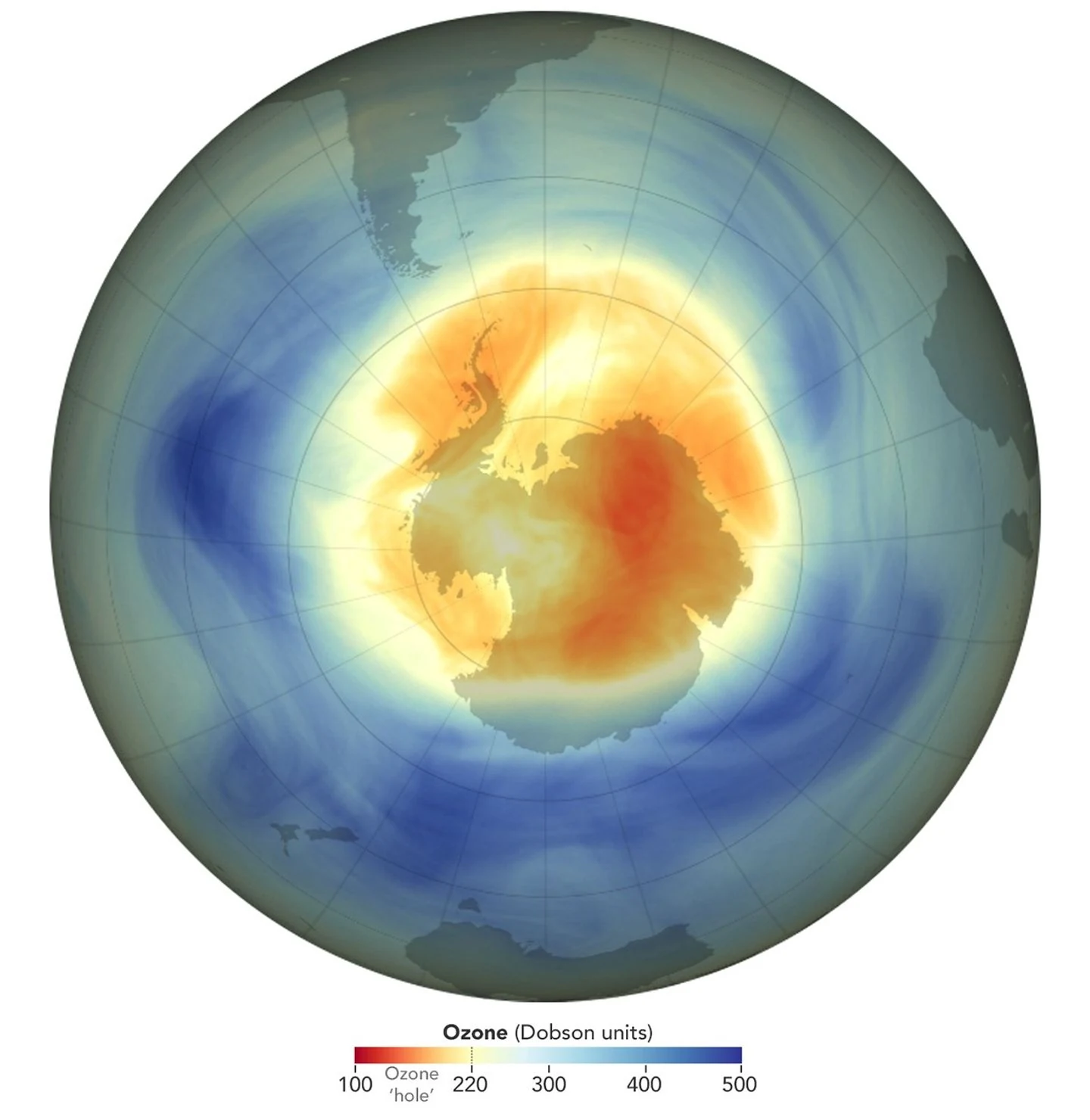
The World Meteorological Organization issued a new ozone bulletin on September 16. It reviews observations from 2025, when the Antarctic ozone hole was relatively small.
The WMO ranks the 2025 ozone hole among the least severe since 1992. For the second consecutive year, its extent and depth were substantially below the averages for 1990–2010.
The maximum ozone mass deficit reached 36.7 million tonnes on September 29, 2025. The average annual maximum for 1990–2010 was 50.1 million tonnes. Mass deficit, area and depth describe different aspects of the phenomenon.
The WMO links long-term recovery to the reduction of ozone-depleting substances under the Montreal Protocol. However, individual seasons are also influenced by stratospheric weather. A relatively small hole in one year does not mean recovery is complete.
The organization stresses the need for continued monitoring: the ozone layer’s return to its earlier condition will take decades. The new bulletin was released on the International Day for the Preservation of the Ozone Layer.
The report’s seasonal findings concern 2025. They are not a final assessment of the Antarctic ozone season in 2026, which is still under way.