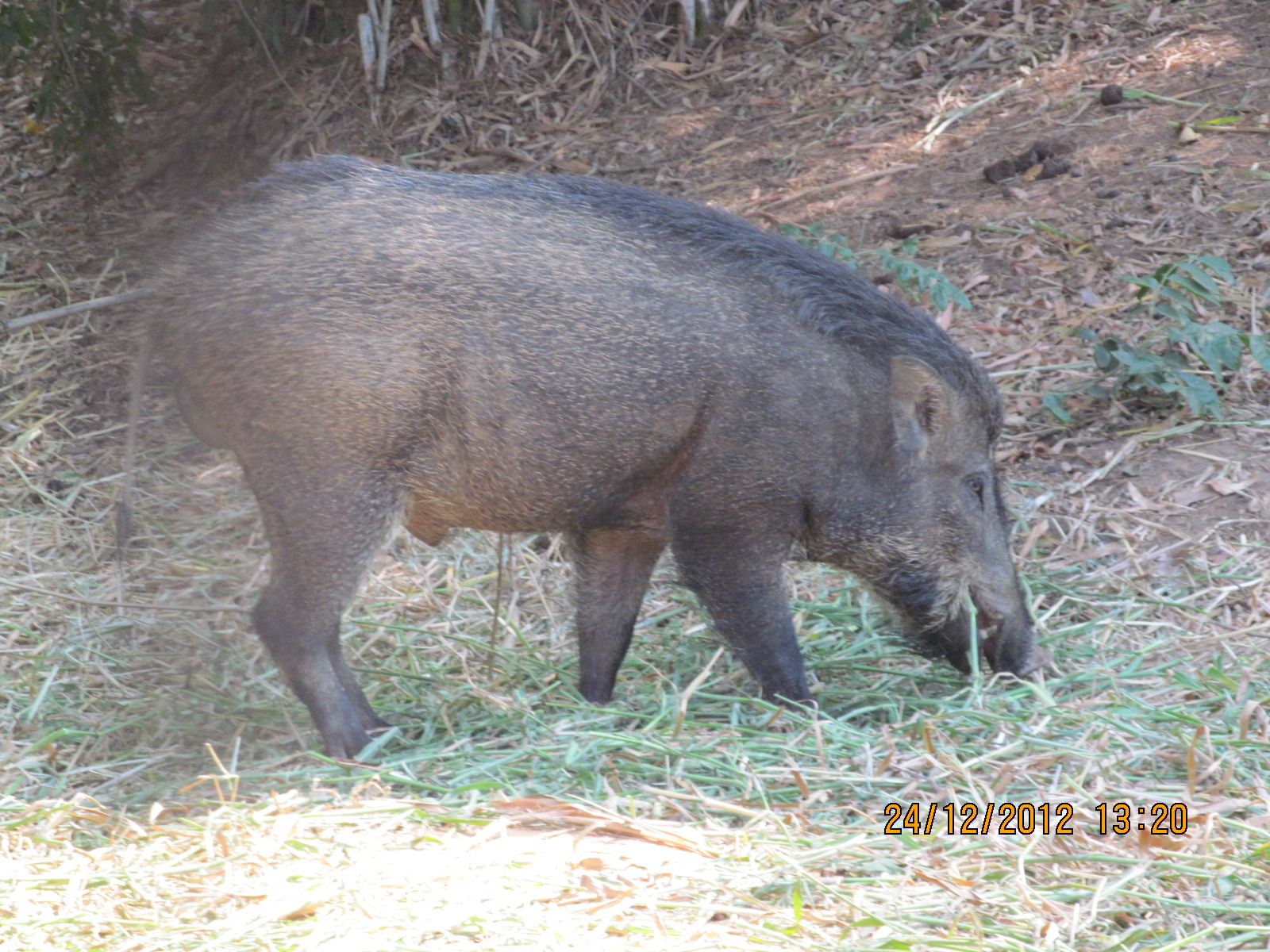
A study of Xishuangbanna’s tropical forests found that sites with more wild boars supported a richer variety of terrestrial vertebrates. At the same time, nearby agricultural land suffered greater crop losses.
Researchers at the Chinese Academy of Sciences’ Xishuangbanna Tropical Botanical Garden compared crop-damage records with camera-trap data from 540 sites. The findings were published in Biological Conservation and reported by the academy on October 28.
Areas with more boars had higher species richness and more stable networks of species co-occurrence. The authors suggest that rooting and wallowing may create small habitats that benefit other animals. The study identifies associations; it does not by itself prove that boars cause the increase in diversity.
Other animals adjusted to their neighbours. Of the 35 species studied, 21 showed greater differences from wild boars in the timing of their daily activity.
The authors recommend considering boars’ ecological role when managing their numbers. They propose fencing and repellents to protect fields, alongside long-term monitoring of changes in forest communities.