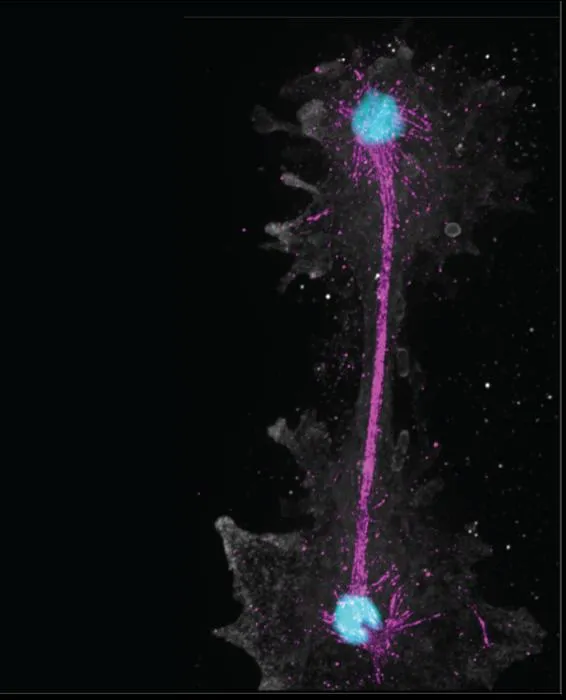
Researchers have described Incendiamoeba cascadensis, a single-celled organism from a geothermal creek in California’s Lassen Volcanic National Park. In the laboratory, the amoeba divided at 63 °C.
The amoeba is a eukaryote, an organism whose cells have a nucleus. Before this study, the known upper temperature limit for eukaryotic reproduction was around 60 °C. The findings were published in Cell.
At 64 °C, the amoeba could still move. It could also recover after brief exposure to 70 °C when returned to cooler conditions. These measures describe different abilities: surviving heat does not mean an organism can continue reproducing at that temperature.
Genome analysis identified distinctive features of genes involved in maintaining proteins and repairing DNA. The researchers suggest that these mechanisms may help the cell tolerate heat.
The study refines our understanding of the limits within which complex cells can live. Heat alone is not enough, however: the organism also needs a suitable environment, water and food.