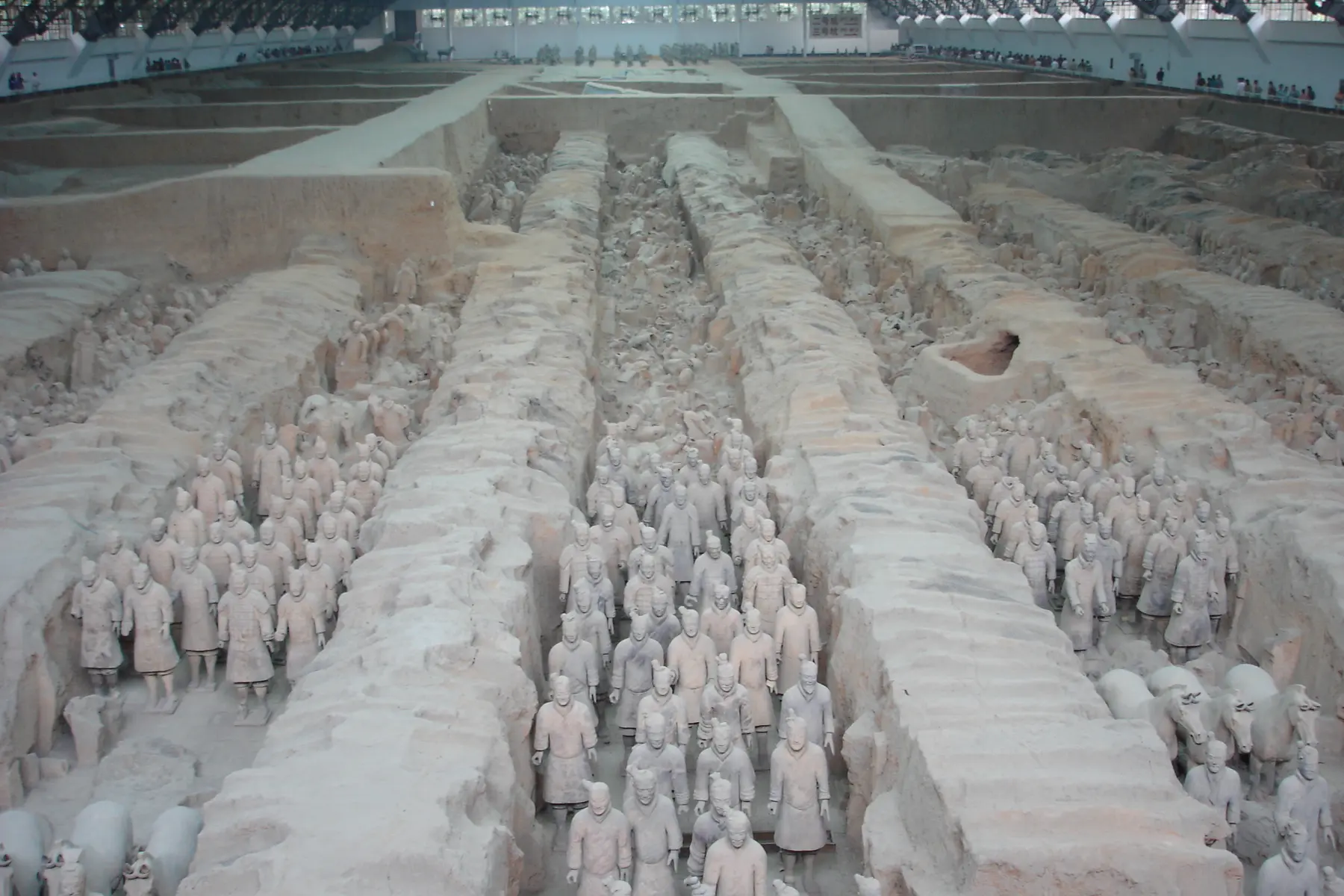
Fingerprints on ancient clay figures have provided new clues about the craftspeople who made China’s Terracotta Army. A study published in the Journal of Cultural Heritage suggests that women and children may have worked alongside adult men.
Scientists examined 79 surviving fingerprints on 36 figures from one part of Emperor Qin Shihuang’s burial complex. The impressions were left in the clay before firing, including on heads, arms and armour details.
The team measured the spacing between fingerprint ridges and used a statistical model that accounts for similarities between different age groups. The model estimated that about 45% of the examined impressions could have been left by adult men, roughly 33% by adult women and 22% by children under 15.
These figures do not establish the exact proportions of workers. One person could have left several fingerprints, while other craftspeople may have left no distinguishable impressions. The sample also covers only a small area of the complex.
The findings challenge the assumption of an exclusively male workshop workforce. Studying fingerprints on other figures will be necessary to establish how widespread this pattern of labour organisation may have been.