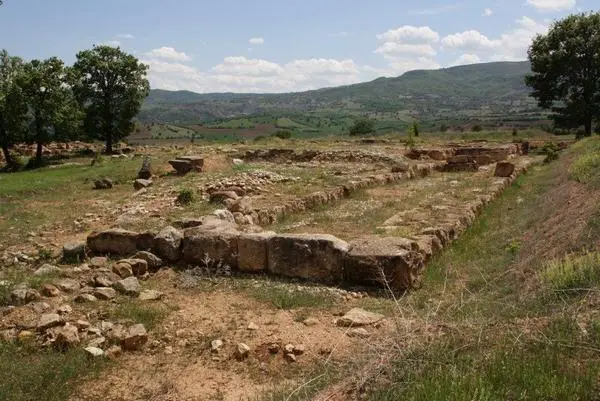
Archaeologists at the ancient city of Šapinuwa in Türkiye's Çorum Province are uncovering a monumental building erected around the 1380s BC. Its purpose remains unknown.
Traces of a Possible Ritual
In one of the symmetrical L-shaped rooms, archaeologists found the headless skeleton of a young animal, probably a lamb or kid. In another room, a cattle skull lay on stone paving.
The remains appear to have been placed deliberately. Hittite texts mention sacrifices during the repair or remodelling of important buildings, and archaeologists have already established that the structure went through several construction phases.
The Plan Found Underground
The building was detected using geophysical methods in 2024. Over three field seasons, researchers traced its outer walls and reconstructed most of the plan; work has now moved into the interior rooms.
Archaeologists cannot yet determine the building's function. Working hypotheses include a temple, an administrative centre, or another public structure, but only new finds can provide an answer. Šapinuwa was one of the Hittite Empire's most important royal, religious, and military centres.